For over a century, the ritual of lighting our homes didn’t change much. A delicate glass bulb, a thin wire filament, and a satisfying click of a switch. Thomas Edison’s incandescent bulb was a masterpiece of the Industrial Age, keeping the dark at bay and defining the cozy, amber glow of the 20th-century home.But it had a dirty secret: it wasn’t actually a very good light source. It was a heater that just happened to glow.
Fast forward to today, and the humble filament has been almost entirely replaced by the Light Emitting Diode (LED). This transition wasn’t just a minor upgrade like swapping tape players for CDs; it was a fundamental shift from chemical and thermal illumination to solid-state physics.
Here is how the death of the filament completely transformed our living spaces.
The Math of the Shift: Efficiency & Lifespan
To appreciate the leap to LED, you have to look at how much energy old incandescent bulbs wasted. About 90% of the energy fed into a traditional bulb was lost as heat, with only 10% actually turning into visible light.
LEDs flipped that equation entirely. Instead of heating a wire until it glows, an LED passes an electrical current through a semiconductor chip.
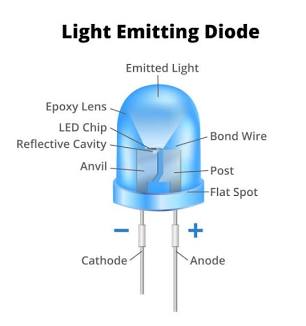
Because there is no fragile filament to burn out and no extreme heat to degrade materials, the lifespan of our household lighting skyrocketed:
| Lighting Type | Average Lifespan | Energy Required (for ~800 Lumens) |
| Incandescent | 1,000 hours | 60 Watts |
| Halogen | 2,500 hours | 43 Watts |
| CFL (Curly Bulbs) | 10,000 hours | 14 Watts |
| Modern LED | 25,000 to 50,000 hours | 8 to 10 Watts |
What this means in real life: If you leave an LED bulb on for 3 hours a day, it can easily last over 20 years before needing a replacement. Changing a light bulb has gone from a frequent chore to a once-in-a-decade event.
Re-engineering Interior Design
When bulbs were bulky, hot glass spheres, architectural lighting was highly restricted. Fixtures had to be designed around heat dissipation and bulb replacement accessibility.
Because LEDs are tiny, cool-to-the-touch diodes, they can be embedded anywhere. This birthed entirely new architectural concepts:
- Recessed and Flush Lighting: Ultra-thin “wafer” lights sit perfectly flat against the ceiling, making low-ceiling basements feel open and modern.
- Under-Cabinet Strip Lighting: Flexible LED tape lights have turned kitchens into luxury culinary workspaces by casting bright, shadowless illumination directly onto countertops.
- Hidden Accent Channels: Dropped ceilings and baseboards can now hide glowing light tracks, making walls and features look like they are floating.
From “Yellow or White” to 16 Million Colors
In the era of the filament, your only choice was how bright you wanted your room’s singular yellow tint to be. Early LEDs didn’t help much either—they were notorious for casting a harsh, sterile, hospital-blue light that people hated.
Today, modern color science has mastered the Kelvin scale (the measurement of light temperature). Better yet, smart LEDs have separated lighting from fixed physics entirely.
With a tap on a smartphone or a quick voice command, a single bulb can shift from a crisp, focused 5000K daylight for morning productivity, to a soft, relaxing 2700K amber for evening winding down—or even transition to vibrant blues, purples, and reds for movie nights.
The Smart Home Unlocked
Because LEDs run on microchips, they speak the same language as our computers and routers. The transition to LED is what ultimately allowed lighting to become “smart.”
Modern homes don’t just use switches anymore. We use automation:
- Geofencing: Your porch light automatically clicks on the second your phone detects you’ve pulled into the driveway.
- Circadian Syncing: Smart lights can subtly shift their color temperature throughout the day, mimicking the natural path of the sun to improve sleep quality and daytime focus.
- Vacation Modes: Systems can mimic human behavior, turning different lights on and off randomly while you are away to deter intruders.
The Verdict
The humble light bulb is no longer just a utility we buy in bulk packs to keep from stumbling in the dark. It has evolved into an architectural tool, an energy-saving marvel, and a core pillar of health and wellness in the modern home.
We might miss the vintage, nostalgic look of an exposed glowing wire—which ironies of ironies, modern LEDs now replicate using “LED filaments”—but our homes, our design capabilities, and our electric bills are vastly better off for the upgrade.