Voltage, Current, and Resistance Explained with Simple Analogies
Smart Electrical AI
Have you ever looked at a wall outlet and wondered how electricity actually works? Phrases like “volts,” “amps,” and “ohms” get thrown around all the time, but what do they actually mean to a normal person?
To understand electricity, we don’t need a degree in engineering. We just need to imagine a garden hose hooked up to a faucet.
Let’s break down the three invisible forces that power our world using this simple water analogy.
Voltage (The Pressure)
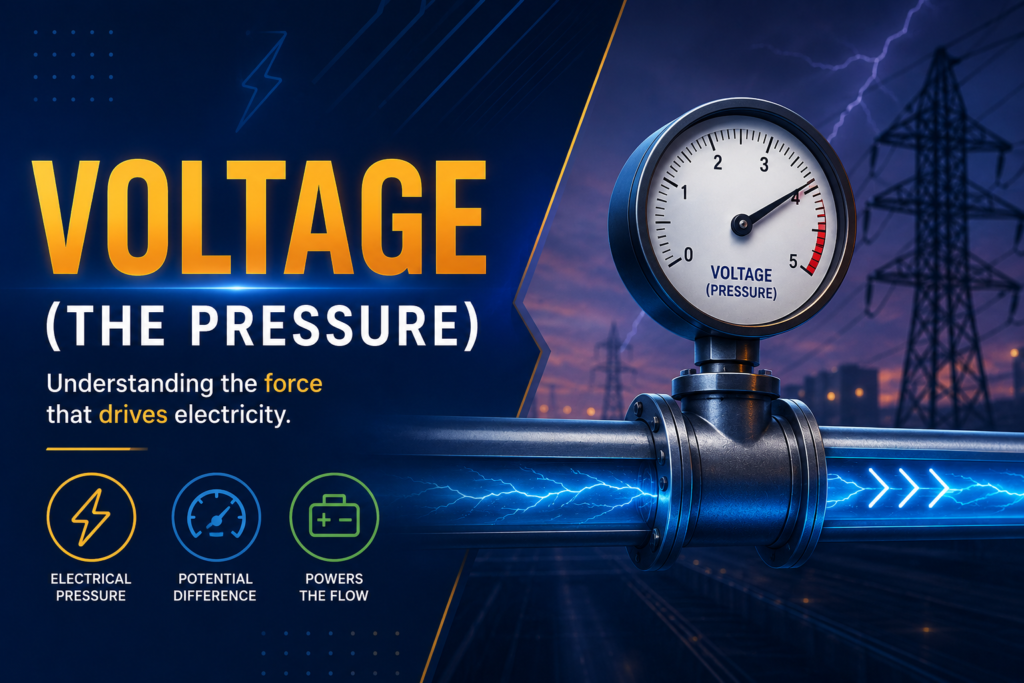
Imagine your garden hose. If the faucet is turned off, the water just sits there. But when you turn the faucet on, pressure pushes the water through the hose.
In the electrical world, Voltage is that pressure. It is the force that pushes electrical energy through a wire.
- Measured in: Volts (V)
- The Analogy: High voltage is like a fire hose with massive water pressure. Low voltage is like a tiny squirt gun. Your home outlets have a lot of pressure (usually 120 or 230 volts), while a AA battery has just a little bit of pressure (1.5 volts).
Current (The Flow)
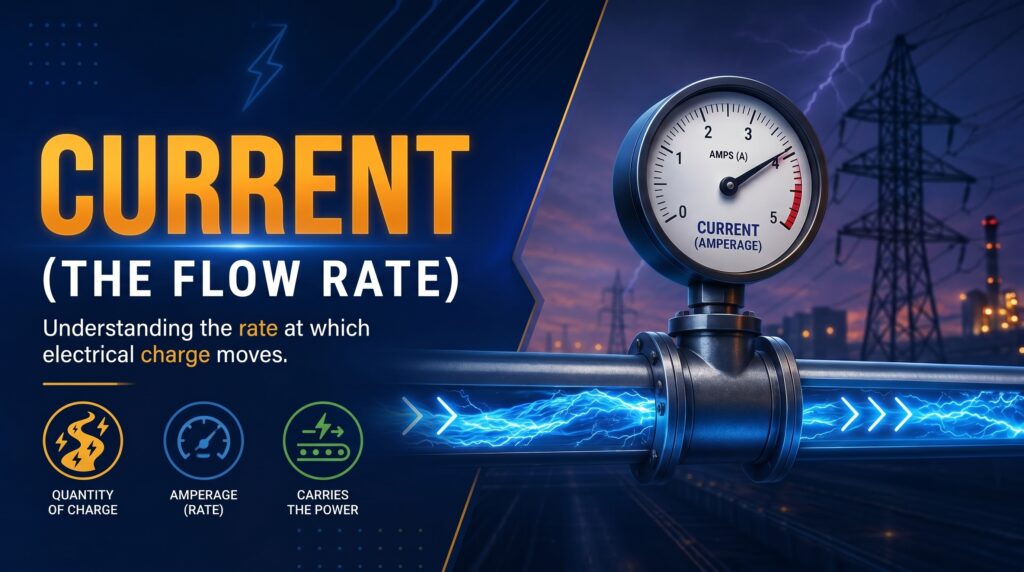
Now, look at the actual water moving through the hose. If you have a wide hose, a large volume of water flows out every second. If it’s a thin straw, only a trickle comes out.
The actual flow of electricity is called Current. It is the physical amount of electrical charge moving through the wire.
- Measured in: Amperes or “Amps” (A)
- The Analogy: Current is the total amount of water passing a single point in the hose per second. More water moving equals higher current.
Resistance (The Restriction)
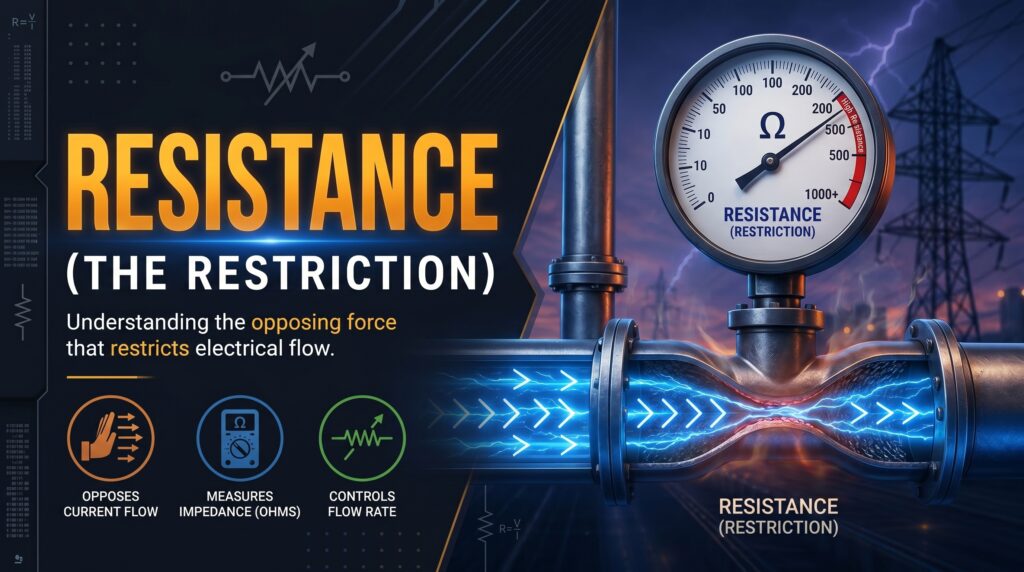
What happens if you step on the garden hose? You squeeze it, making it harder for the water to get through. The water slows down, and less comes out the other end.
In a wire, this squeezing effect is called Resistance. It is how much a material fights against the flow of electricity.
- Measured in: Ohms (Ω)
- The Analogy: Stepping on the hose, or a kink in the pipe, is resistance. Copper wires have very low resistance (like a wide, clean pipe), which is why we use them to carry electricity. Rubber has incredibly high resistance (like a completely blocked pipe), which is why electrical wires are wrapped in rubber to keep the electricity from escaping.
Putting It All Together
Think of it as a team effort:
- Voltage pushes the electricity forward.
- Current is the electricity actually moving.
- Resistance tries to slow it down.
When you plug in a smartphone charger, the voltage from the wall pushes a safe amount of current through the wire, because the charger’s internal components provide just the right amount of resistance to keep things from overheating.
And that is electricity in a nutshell!